
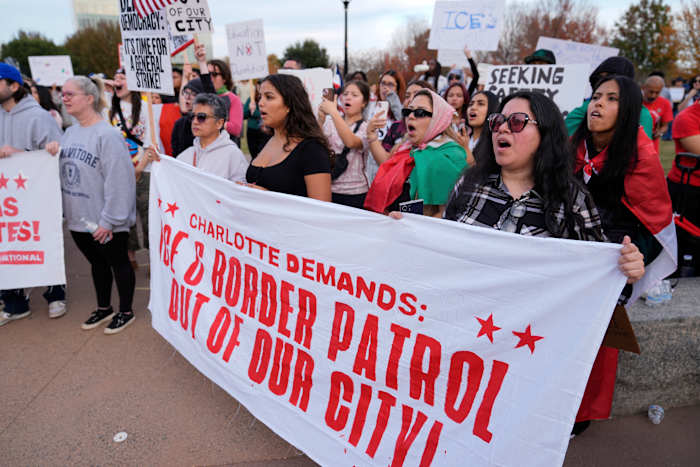
This news report about the recent surge in Border Patrol activity in Charlotte, North Carolina drew intense scrutiny. Community members and policymakers have questioned whether the operation genuinely enhanced public safety or if it instead amplified fear, particularly among immigrant and minority populations. The article was flagged by readers seeking clarity over concerns of racial profiling and whether the enforcement surge was motivated more by politics than crime prevention.

The use of large-scale immigration enforcement operations in U.S. cities has been contentious for years. Past surges, such as “Operation Midway Blitz” in Chicago and similar crackdowns in Los Angeles, led to public protest, legal challenges, and criticism over tactics perceived as heavy-handed and discriminatory. In Charlotte, the situation unfolded against the backdrop of so-called sanctuary policies, where local authorities limited cooperation with federal immigration agents—a point of ongoing friction with the federal government. These tensions have often highlighted the fine line between enforcing the law and maintaining community trust.

Claim #1: “The Trump administration has made the Democratic city of about 950,000 people its latest target for an immigration enforcement surge it says will combat crime, despite fierce objections from local leaders and downtrending crime rates.”
This claim is accurate based on current research. The Department of Homeland Security (DHS) did deploy Border Patrol agents to Charlotte, with the stated purpose of addressing public safety and crime. Local officials, including Governor Josh Stein, publicly objected to both the necessity and timing of the operation. Moreover, police-reported crime data for Charlotte confirms a decline in major offenses in 2025, with notable drops in homicide, robbery, and auto theft. This discrepancy between crime statistics and justification for the operation has fueled debate about the true motivations behind the surge. (Read more)

Claim #2: “Charlotte residents reported encounters with federal immigration agents near churches, apartment complexes and stores.”
Reporting from multiple independent outlets confirms the truth of this statement. Federal immigration agents were seen near numerous public and private locations, including commercial parking lots and community spaces. Residents’ reports and on-the-ground observations described unmarked vehicles and armed personnel conducting operations, thus validating these community-based accounts. (Learn more)
Claim #3: “DHS alleged that about 1,400 detainers across North Carolina had not been honored, putting the public at risk.”
This claim reflects official statements from the Department of Homeland Security. Mecklenburg County, home to Charlotte, declined to honor a substantial number of federal detainer requests since 2019. DHS asserts that approximately 1,400 such detainers were not complied with statewide, arguing this enabled the release of individuals with criminal records. While this statistic is cited in government records, critics note it can lack context, as the actual risk posed by those released varies depending on the severity of their offenses. (Further details)
Claim #4: “Gregory Bovino, who led hundreds of U.S. Customs and Border Protection agents in a similar effort in Chicago, documented some of the more than 80 arrests he said agents had made in social media posts on Sunday.”
This statement is supported by documented activity. Gregory Bovino, a Border Patrol commander previously involved in enforcement surges in cities like Chicago, took to social media to report and share photos of those detained during the Charlotte operation. News outlets verified these posts and the number of arrests reported over the course of the weekend. (More information)
The article accurately reports the key facts surrounding the Border Patrol’s surge in Charlotte, North Carolina. Primary assertions regarding crime rates, detainers, community encounters, and the documented number of arrests are corroborated by both government data and independent news reports. However, it is important to acknowledge the strong framing around potential racial profiling and the sense of fear reportedly stoked by the operation. Local leaders, activists, and civil rights groups have critiqued both the methods and intent of these surges, emphasizing the impact on immigrant and minority communities. In presenting advocacy statements alongside verified facts, the article provides a clear account of official actions while also amplifying concerns about fairness, profiling, and community division. Readers should understand that, while the enforcement surge is rooted in federal immigration law, its broader social consequences and motivations remain subjects of legitimate public debate. All claims are substantially supported by available research.
Want news you can trust? Get the facts, not the spin. Download the DBUNK App to submit your fact-check requests—completely free!