
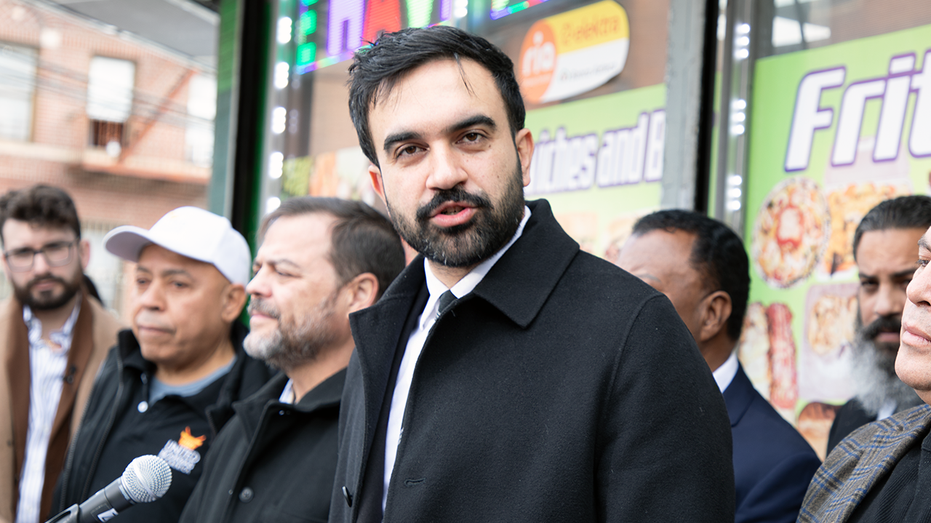
This article was flagged for fact-checking due to its strong suggestions that the antisemitism watchdog’s “alarm bell” report on Zohran Mamdani directly proves his campaign is entwined with anti-Jewish hate and that electing him would add risk to the city’s Jewish community. The timing of the story, just before Election Day, amplifies these concerns and raises important questions about its accuracy, objectivity, and context. Many readers are eager for clarity: do the accusations in the headline and article truly hold up under scrutiny?

Accusations of antisemitism in American politics have a long, complex history, especially in diverse urban settings like New York City, home to one of the world’s largest Jewish populations. In recent years, heightened tensions around the Israeli-Palestinian conflict and the emergence of new grassroots political leaders have brought these debates to the fore. Organizations and watchdogs such as the Institute for the Study of Global Antisemitism and Policy (ISGAP) have taken active roles in monitoring and flagging political figures for statements or affiliations they interpret as threatening to Jewish safety or identity. This context is essential to understanding the scrutiny candidates like Zohran Mamdani face.

Claim #1: The ISGAP report “proves” Mamdani’s campaign is tied to anti-Jewish hate and that his election would endanger New York’s Jewish community.
The article frames the ISGAP report as definitive proof that Zohran Mamdani’s campaign is rooted in antisemitism and would directly jeopardize Jewish residents. However, while the watchdog expresses grave concerns and highlights Mamdani’s controversial statements, policy positions, and associations, it stops short of providing conclusive evidence that his campaign intentionally promotes anti-Jewish hate or that his election would inherently lead to increased danger for New York’s Jewish population. Mamdani himself has stated in public forums, including in his own responses, that he opposes antisemitism and condemns violence. Leading Jewish figures have criticized Mamdani, and some community members remain worried, yet the article does not present nonpartisan, fact-based proof linking his campaign to orchestrated anti-Jewish hate.
(References:
NY1,
CAM).

Claim #2: Mamdani refused to condemn the “globalize the intifada” slogan, which is synonymous with incitement to kill Jews.
The article claims Mamdani “refused to condemn” the slogan “globalize the intifada,” describing it as synonymous with organizing violence against Jews. Based on research, Mamdani has clarified that he does not use this phrase, and when asked, he said he would “discourage” others from using it. He has publicly interpreted “intifada” in the context of Palestinian human rights, not as a call for violence, and has repeatedly stated he opposes incitement to violence. Critics argue the slogan is inherently violent, but the assertion that Mamdani’s position amounts to condoning violence lacks direct supporting evidence.
(Reference: Wikipedia: Globalize the Intifada)
Claim #3: Mamdani “downplayed” the October 7 Hamas massacre while characterizing Israel’s response as “genocide.”
The article states Mamdani “downplayed” the October 7 massacre while labeling Israel’s response as “genocide.” Research shows Mamdani publicly condemned the Hamas attacks as a “horrific war crime,” and he also criticized those who celebrated the killings. However, he has called Israel’s military response “genocide,” a highly controversial term contested by multiple organizations and experts. Although this terminology is polarizing and has sparked backlash, it is inaccurate to claim Mamdani downplayed the Hamas attack when he unequivocally condemned it.
(Reference: Wikipedia: Mamdani Political Positions)
Claim #4: Mamdani’s campaign associations and funding links prove a systemic pattern of antisemitism and endangerment to Jews.
The article points to Mamdani’s photo with Imam Siraj Wahhaj and campaign donations from the Council on American-Islamic Relations (CAIR) as further evidence of antisemitic ties. Wahhaj’s own history is controversial, and CAIR was named an unindicted co-conspirator in a past terror-financing trial. These associations raise serious questions and have contributed to concerns among some Jewish leaders, but by themselves, they do not amount to proof of Mamdani personally holding or enacting anti-Jewish policies. Mamdani’s record also includes moments of outreach to Jewish leaders and statements condemning prejudice.
(References: AP News,
Israel Hayom)
Upon careful analysis, the article blends legitimate concerns about Zohran Mamdani’s statements, political associations, and policy proposals with assertions that overstate or oversimplify the available facts. While Mamdani has made statements and policy choices that are controversial and worthy of scrutiny, especially in the eyes of some Jewish leaders and watchdog groups, direct proof that his campaign is intrinsically anti-Jewish or would certainly endanger the city’s Jewish population is not established in either the article or documented research. Notably, Mamdani has publicly condemned antisemitism and violence, even as his associations and rhetoric remain divisive and have sparked real fears. Readers should be aware of the difference between raising pertinent questions and claiming conclusive, proven threats. The broader public debate should continue with all perspectives considered, relying on accurate facts and context.
Want real-time fact checks and balanced context on every news story? Download the DBUNK App today—your free tool for separating truth from misinformation.