
Introduction
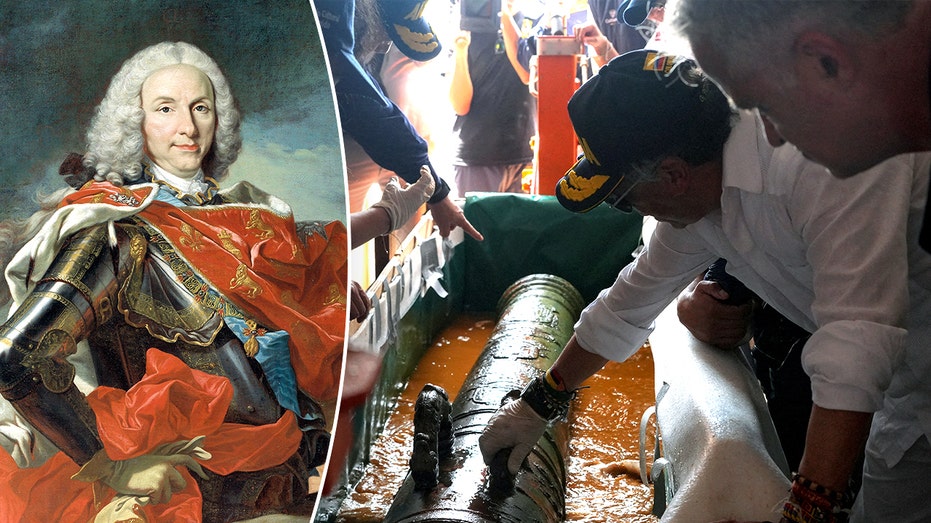
This article drew attention for its coverage of the initial artifact recovery from the legendary San José galleon—often termed the “Holy Grail” of shipwrecks—off Colombia’s coast. The scale of the reported treasure, the involvement of government dignitaries, and the ongoing international disputes have fueled questions, including suspicions that the high-profile announcements serve to distract from political controversies or justify expensive maritime expeditions.

Historical Context
The San José galleon, which sank in 1708 during a naval battle with a British fleet, has fascinated historians, treasure hunters, and governments for generations. Estimated to have carried a cargo of immense wealth—gold, silver, and jewels—the ship’s final voyage coincided with the Spanish Empire’s efforts to finance ongoing wars. Since the wreck’s location was confirmed in 2015 by Colombian authorities, the site has been enveloped in legal disputes between Colombia, Spain, and private claimants, with each party vying for ownership. These recovery missions are often celebrated as acts of cultural preservation, yet they also attract scrutiny regarding their cost, international implications, and political timing.

Fact-Check of Specific Claims
Claim #1: Archaeologists in Colombia have retrieved the first items from the fabled San José galleon.
The article states, “Archaeologists in Colombia have retrieved the first items from the fabled San José galleon, a wreck known as the ‘Holy Grail of shipwrecks’ due to its sheer amount of treasure.” This claim is confirmed by independent news coverage, including a November 2025 report by The Guardian, which details how Colombian scientists recovered a cannon, three coins, and a porcelain cup from the wreck during a government-sanctioned research operation. The items were showcased by the country’s Ministry of Culture, further validating the authenticity of the recovery. (Source)
Claim #2: The shipwreck is believed to contain about 11 million gold and silver coins, along with emeralds and other valuable cargo. Its treasure is worth as much as $20 billion.
The article describes the San José as holding “about 11 million gold and silver coins, along with emeralds and other valuable cargo. Its treasure is worth as much as $20 billion.” This valuation and estimate have been widely circulated in reputable media, reflecting both historical records and modern-day analysis of such shipwrecks. CBS News and other sources corroborate that the overwhelming amount of gold, silver, and gemstones potentially lost with the San José places its value in the billions, making the figure plausible, though still speculative since the majority of the treasure remains on the sea floor. (Source)
Claim #3: The wreckage’s exact location has been kept a state secret, and it lies nearly 2,000 feet deep in the sea.
The article asserts, “The wreckage’s exact location has been kept a state secret, and it lies nearly 2,000 feet deep in the sea.” This detail is accurate and has been substantiated by both Colombian officials and international press. To protect against looting, the coordinates remain undisclosed, and the wreck sits roughly 600 meters (nearly 2,000 feet) below the surface, making recovery difficult and expensive. (Source)

Claim #4: Government announcements about the San José serve as a distraction from scandals or to justify costly expeditions.
This concern, while central to the user’s question, is not directly asserted in the article but underpins public skepticism. Historical research shows it is not uncommon for governments to promote high-profile treasure hunts or archaeological finds to boost national pride or shift public focus during challenging times. Recent reports of increased treasure discoveries in the United Kingdom and new maritime explorations in the United States illustrate how such events are leveraged in the media. However, there is currently no direct evidence that the Colombian government’s announcement regarding the San José artifacts was intended solely to distract from political scandals or provide cover for large expenditures. These missions are officially justified as scientific and cultural work, even as critics debate their timing and fiscal priority. Public scrutiny and transparency remain advisable but, based on the evidence, the claim remains speculative.
Conclusion
The key claims highlighted in this article about the San José galleon—the recovery of its first artifacts, the estimated value and cargo, and the secrecy regarding its location—hold up to scrutiny and are corroborated by leading news outlets and historical documents. The underlying suggestion that the government may use such events for distraction or justification of costs is a broader societal concern observed in other contexts; however, there is no concrete evidence to suggest this is occurring in Colombia’s current treasure recovery efforts. The article’s reporting aligns closely with independently verified facts, although readers should always assess the broader implications and remain attentive to timing and framing in high-profile announcements.
Link to Original Article