
Fact-Check Analysis
This news story was flagged for fact-checking due to its portrayal of the San José galleon shipwreck as a $20 billion “holy grail” of treasure, and questions from readers about whether such headlines simply hype up the value to allow foreign interests to claim Colombia’s historic riches under the cover of archaeology. We examine not only the facts around the recovery of the ship’s artifacts, but also the surrounding debates and controversies.

Historical Context
The San José galleon, a Spanish treasure ship, sank off the Colombian coast in 1708 during a clash with the British navy. Believed to be carrying one of the largest hauls of gold, silver, and emeralds ever lost at sea, the wreck has been the focus of fascination, legal disputes, and claims from multiple nations and private firms. After extensive searching, its remains were officially located by the Colombian government in 2015, but long-standing controversies around ownership, preservation, and the ethics of treasure hunting have persisted into the present.

Fact-Checking the Key Claims
Claim #1: The San José galleon contains a $20 billion treasure and has just yielded its first artifacts
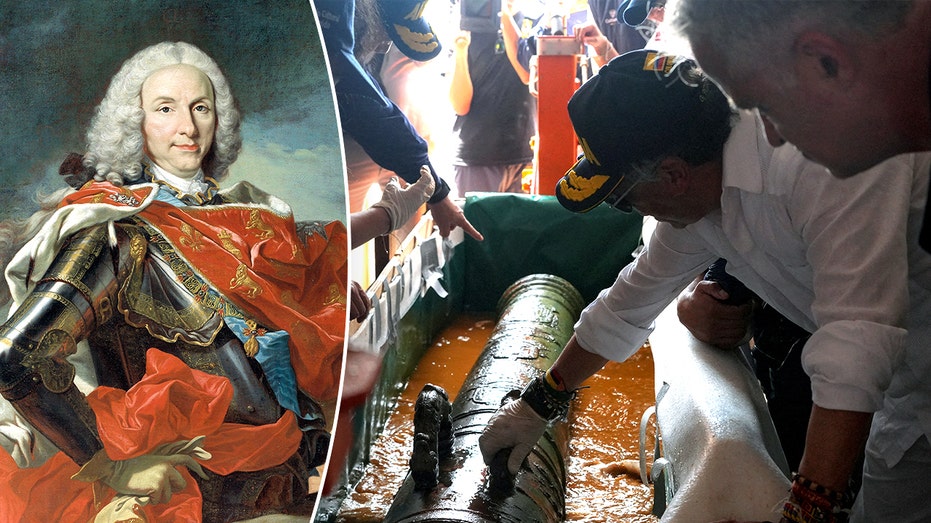
The article asserts that the San José galleon is believed to hold about 11 million gold and silver coins, emeralds, and that the total value could reach $20 billion. It also claims recent retrievals are the first from the site. This is accurate. In November 2025, Colombian archaeologists recovered a cannon, three coins, and a porcelain cup—the first items officially retrieved as part of a scientific mission. The estimated value of all treasure on board ranges widely, but is often cited at values up to $20 billion. See
Associated Press reporting for confirmation.
However, the “$20 billion” sum reflects the most optimistic and headline-grabbing appraisals; actual market and historical value could differ. Such numbers do drive international attention and, as critics note, can frame the site as a target for treasure hunters over cultural heritage interests.
Claim #2: Colombia’s government is prioritizing scientific research over treasure hunting
The article repeats the government’s stance—“Petro’s government has affirmed that the deep-water expedition is focused on research, not treasure hunting.” This representation matches official statements and recently enacted policies. The Colombian Ministry of Culture and scientific bodies have emphasized that their aim is archaeological study and preservation. They have declared the site a protected archaeological zone in 2025, restricting commercial salvage and reaffirming research priorities. This intent is documented in the
Spanish news outlet El País.
Nevertheless, fears persist among cultural advocates, historians, and some politicians that the focus on “scientific research” could be used to justify extraction or eventual sale of artifacts, or to placate international investors with claims or pending litigation. As legal battles continue, skepticism remains common—but to date, the operation is led by public agencies and not by private or foreign treasure companies.

Claim #3: Foreign salvors are poised to profit from Colombia’s heritage under archaeological pretenses
The user’s central question—whether the “treasure hype” is a pretext for foreign salvage rights—is grounded in real, ongoing disputes. The U.S.-based group Sea Search Armada has litigated for a share of the San José’s treasure since claiming discovery in 1982, seeking compensation for up to 50% of the overall value. These claims are the subject of arbitration and legal wrangling in multiple countries. Concerns persist among Colombian heritage defenders that commercial interests—particularly those backed by foreign courts or investors—could eventually override local control or the preservationist priorities.
However, current Colombian policy restricts the role of commercial salvage; all recent recovery efforts have been publicly led, with no direct involvement by SSA or similar entities. The government has publicly committed to protecting Colombian cultural patrimony, as evidenced by the site’s protected status and the transparency around the ongoing expeditions. While legal disputes make the future complicated, there is no current evidence that foreign salvors are being allowed to loot under the guise of archaeology. Instead, these risks remain a focus of public debate and vigilance.
See the latest AP coverage.
Claim #4: Ownership and site location remain secret to avoid looting
The article accurately states that the shipwreck’s precise location is a Colombian state secret, and that it lies nearly 2,000 feet deep. This is documented by both government releases and international media, and is part of preservation efforts to avoid unauthorized access or theft. The secrecy aligns with best practices in heritage protection for sites of this potential value and vulnerability.
Conclusion
The article captures the essential facts: the San José shipwreck is of immense historical, monetary, and cultural value. The Colombian government, after years of international disputes and legal pressure, is currently conducting artifact recovery as part of a scientific and conservation-focused effort. While headlines emphasizing the $20 billion figure are not fabricated, they are derived from the highest-value speculations. Fears that foreign salvage companies could exploit Colombia’s heritage are legitimate given past legal disputes, but there is no present evidence of such activity in current Colombian-led missions. The situation is being closely monitored, with transparency and protection of cultural patrimony at the forefront.
Concerned readers who wish to stay informed or get involved in protecting the truth around global heritage stories are encouraged to use tools like DBUNK to check competing claims, review sources, and participate in fighting misinformation.
Take Action Now
Empower yourself with accurate news and see both sides of every headline.
Download the DBUNK App today to request fact-checks and stay ahead of misinformation.
Read the original news article
here.