
Introduction
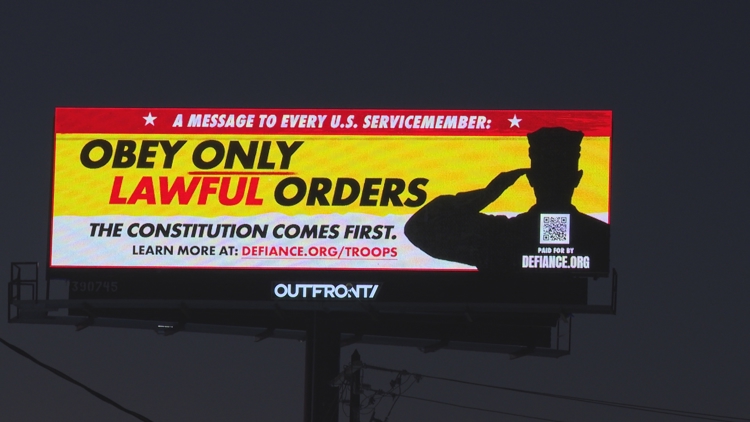
A recent news story gained attention after billboards near Tampa’s MacDill Air Force Base urged military personnel to “Obey Only Lawful Orders.” Readers flagged this article for fact-checking due to questions about the accuracy of claims concerning alleged unlawful orders, the legality of the billboard campaign, and whether those behind the message could face criminal charges. The topic sits at the crossroads of free speech, military conduct, and contentious political debate, making clarity essential.

Historical Context
Public debate over the limits of military obedience and civilian control of the armed forces has a long history in the United States. The Uniform Code of Military Justice (UCMJ) requires service members to obey only lawful orders, and the legality of specific actions—especially military strikes not authorized by Congress—has sparked controversy for decades. In 2025, allegations of unauthorized airstrikes against alleged drug smuggling vessels in the Caribbean and Pacific brought these issues to the fore, leading nonprofits and lawmakers to question the lawfulness of presidential military directives and advocate for informed resistance to illegal orders.

Fact-Check Specific Claims
Claim #1: The Trump administration ordered service members to carry out airstrikes against alleged drug boats in the Caribbean and Latin America earlier this fall.
This claim is accurate. Multiple reputable sources, including the Associated Press, report that the U.S. military executed airstrikes targeting suspected drug-smuggling vessels in the Caribbean and the eastern Pacific. For example, two reported strikes in December 2025 resulted in several fatalities, confirming U.S. involvement in these actions. These operations were widely covered and acknowledged by U.S. officials, supporting the article’s depiction of recent military orders.
Read the AP story
Claim #2: The White House has insisted that these strikes are lawful and within their authority.
This claim is supported by official statements and news coverage. The Trump administration justified the strikes by stating their necessity to combat drug trafficking and maintain national security. The White House maintained that these military actions fell within the president’s powers as Commander-in-Chief, a position echoed in multiple press briefings and national defense news outlets.
Explore more at Defense News
Claim #3: Democratic lawmakers and international authorities have called these airstrikes illegal, arguing that lethal force is only justified by an imminent threat.
This claim is accurate and provides relevant context. Lawmakers and human rights advocates have voiced opposition to the strikes, citing that the U.S. was not formally at war with Venezuela and raising concerns about international law. The UN High Commissioner for Human Rights and several members of Congress publicly argued that such lethal action requires clear imminent peril, which they contend was not present in these incidents. This aligns with public statements referenced by the article.
See the international reaction
Claim #4: The Defiance.org and WhistleblowerAid.org billboards and legal hotlines campaign are specifically aimed at reminding troops to obey only lawful orders, providing them advice and support.
This claim is well-substantiated. Defiance.org has confirmed launching this campaign, including billboard placements and providing military personnel with resources on whistleblower protections and legal assistance. Their stated mission is to ensure troops are empowered to recognize and respond appropriately to orders deemed unlawful, which matches the article’s description.
Visit Defiance.org’s campaign page

User Question: Can the Person Who Put Up the Billboard Be Charged With Any Crimes?
The message “Obey Only Lawful Orders” is both constitutionally protected and consistent with the Uniform Code of Military Justice, which mandates refusal to carry out unlawful commands. Reviewing U.S. legal precedent and recent cases, there is no evidence that posting this message would, by itself, result in criminal charges. The United States upholds broad First Amendment protections for nonviolent political speech, including billboard messages, unless the content is obscene, incites imminent lawless action, or promotes illegal activities.
Examples in recent history, such as the Montgomery, Alabama billboard controversy—where no charges resulted from contentious speech—or the activism of “Billboard Chris,” indicate that law enforcement seldom imposes criminal penalties solely for provocative billboards unless additional laws are clearly violated. Thus, absent evidence of false advertising, obscenity, or direct incitement to crime, those responsible for the billboard’s placement remain within their legal rights.
Read about similar controversies
Conclusion
The article largely presents the facts accurately regarding the recent military strikes, the official positions of the Trump administration and its critics, and the intent and actions of the Defiance.org billboard campaign. No major inaccuracies or misleading framing were detected. Both the billboard message and the support offer to service members are grounded in established U.S. policy and legal rights.
In answering the user’s key question: There is no indication that an individual or group commissioning a billboard that encourages military personnel to obey lawful orders—and refuse unlawful ones—would face criminal charges under current federal or state law. The message remains protected speech unless accompanied by illegal content or intent.
For readers concerned about media accuracy and legal nuance, the facts confirm that while the campaign is controversial, it is clearly lawful, and the article conveys the situation with appropriate context and balance.
Take Action Now
Want trustworthy fact checks at your fingertips? Download the DBUNK App and join a community dedicated to media accuracy. You can submit your own fact-check requests for free.
Link to Original Article