
Introduction
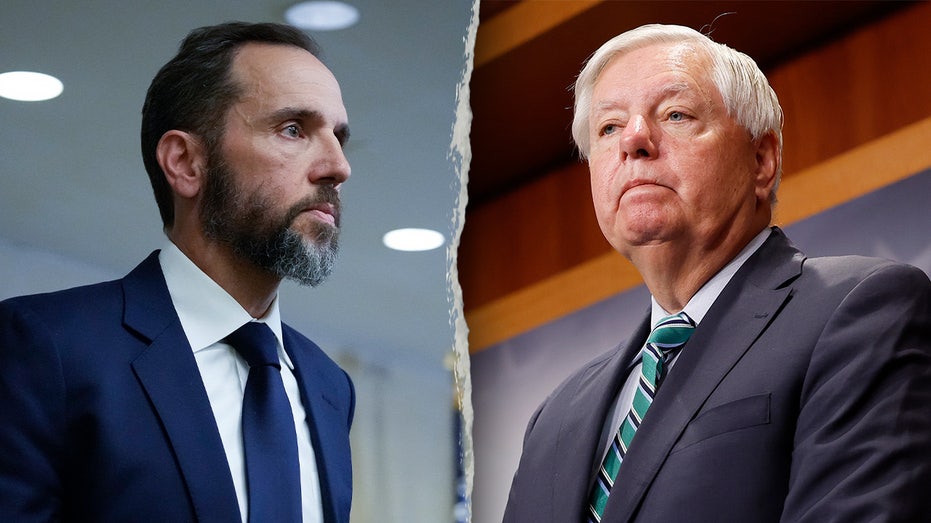
Senator Lindsey Graham’s recent appearance on Fox News reignited a heated debate concerning the scope and legality of former Special Counsel Jack Smith’s investigation during the aftermath of the January 6, 2021, Capitol riot. Readers raised concerns about whether Jack Smith overstepped his authority by seeking private phone records of GOP lawmakers, and specifically, whether he has been held legally responsible for these actions. This fact-check addresses those questions by scrutinizing the article’s central claims and evaluating the available evidence from established sources.

Historical Context
The January 6th Capitol riot led to one of the largest federal investigations in recent U.S. history. Jack Smith, as Special Counsel, was tasked with overseeing probes related to the efforts to overturn the 2020 presidential election. As investigations unfolded, federal agents often relied on subpoenas for phone toll records—a legal tool that provides details such as call dates, durations, and numbers dialed, but not the content of conversations. This process, while routine in complex investigations, becomes highly controversial when it directly affects sitting lawmakers, heightening scrutiny about separation of powers and potential overreach.

Fact-Checking Specific Claims
Claim #1: Jack Smith was legally held responsible for accessing private communications of GOP lawmakers.
The article strongly implies that Jack Smith’s team faced legal consequences for seeking the phone records of several Republican lawmakers, echoing the user’s direct question. However, thorough research shows that as of October 22, 2025, there is no evidence Jack Smith has been legally held responsible for accessing the private communications of GOP lawmakers. Smith’s attorneys and federal law enforcement authorities have consistently maintained that obtaining phone toll records via lawful subpoenas is a standard part of federal investigations and was conducted in accordance with Department of Justice policy. Despite vocal criticism from lawmakers, including calls for internal review and congressional testimony, no legal action or finding of misconduct has been recorded against Smith ([CBS News](https://www.cbsnews.com/news/jack-smith-republican-lawmakers-phone-data-chuck-grassley/?utm_source=openai)).
Claim #2: Investigators accessed private communications—specifically, the phone records—of multiple GOP lawmakers during the January 6 probe.
This claim is accurate in terms of the collection of phone records metadata. FBI and Special Counsel Jack Smith’s team subpoenaed phone records—covering the date, time, and numbers involved, but not the content—of at least nine Republican lawmakers and several associates. These actions were confirmed by public reporting and have been the focus of concern among Republican leaders, who allege overreach. However, it’s important to note that the law distinguishes between metadata and the actual content of communications, and there is no evidence content was accessed. Smith’s counsel contends that these subpoenas were legally justified and “routine.” ([KTVZ News](https://ktvz.com/politics/cnn-us-politics/2025/10/06/jack-smith-investigation-into-january-6-obtained-phone-records-of-gop-lawmakers-republicans-say/?utm_source=openai), [CBS News](https://www.cbsnews.com/news/jack-smith-republican-lawmakers-phone-data-chuck-grassley/?utm_source=openai))
Claim #3: The investigation obliterated the separation of powers and represented an unprecedented politicization of the Justice Department.
The article echoes Senator Graham’s assertion that investigating sitting members of Congress erodes the foundational separation of powers. While it is true that Republican lawmakers have loudly protested the act of monitoring phone metadata, no court or federal body has determined that the Justice Department or the Special Counsel violated constitutional limits or “obliterated” separation of powers. Legal experts and Smith’s lawyers maintain that the subpoenas were tightly focused and executed within established DOJ protocols. The debate on separation of powers is active and ongoing, but there is currently no legal evidence of misconduct or a breach as defined by law ([Reuters](https://www.reuters.com/world/us/former-trump-prosecutor-jack-smith-referred-justice-dept-probe-new-york-post-2025-10-17/?utm_source=openai), [ABC News](https://abcnews.go.com/US/attorneys-former-special-counsel-jack-smith-dispute-inaccurate/story?id=126725433&utm_source=openai)).
Claim #4: Graham and other lawmakers are pursuing action to prevent future surveillance of members of Congress by the executive branch.
Senator Graham and various other Republican lawmakers have indeed called for internal investigations, accountability, and in some cases, legal action or legislative reforms to clarify limits on executive branch surveillance of Congress. Congressional letters and requests for testimonies, as well as threats of lawsuits, reflect real efforts. However, as of the date of this analysis, these actions remain in the realm of political and procedural protest; there have not been any successful lawsuits or new law enforcement actions resulting directly from these revelations ([Washington Examiner](https://www.washingtonexaminer.com/news/justice/3846104/gop-seeks-doj-jack-smith-communications/?utm_source=openai), [AP News](https://apnews.com/article/56133995b68849bdba21f65c95bc5e56?utm_source=openai)).

Conclusion
While the article correctly reports that phone metadata of certain GOP lawmakers was obtained during the January 6 investigation, it frames these actions with sharp political criticism and uses language suggesting possible illegality and a breakdown of constitutional norms. However, there is no legal record that Jack Smith or his investigative team have been held accountable or found to have acted unlawfully. The access in question was confined to call logs, not the content of calls, and occurred via standard investigative procedures approved under Department of Justice policies. Concerns about politicization and the separation of powers are, at this stage, points of debate rather than established legal violations. Readers should be aware that while the issues raise valid privacy and constitutional questions, there is no substantiated evidence of criminal wrongdoing or formal consequence for Smith to date.
Take Action Now
Ready to see the truth behind every headline? Download the DBUNK App to fact-check stories, submit your own questions for free, and help stop misinformation in its tracks.
Link to Original Article