
Introduction
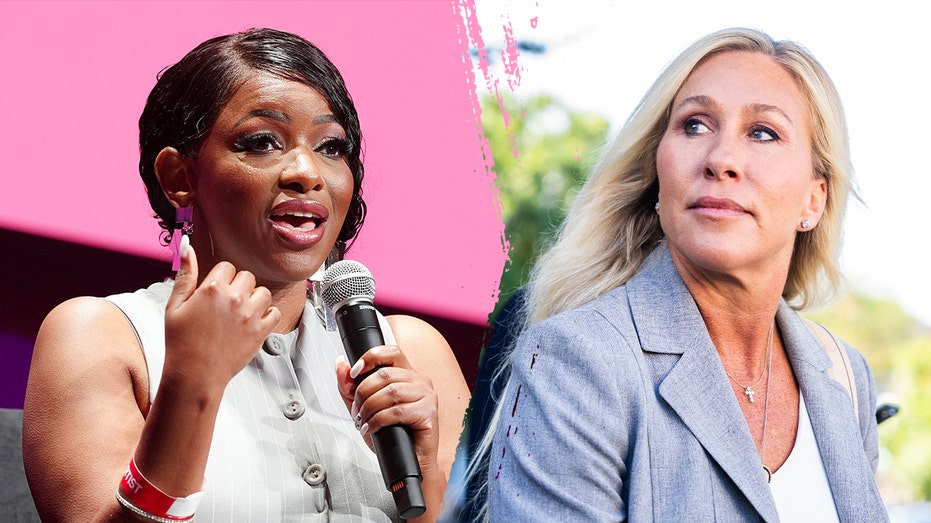
This article was flagged for fact-checking after readers questioned claims about Representative Marjorie Taylor Greene’s resignation from Congress, specifically the implication by Representative Jasmine Crockett that Greene quit because of pressure from President Donald Trump. The circumstances surrounding Greene’s departure and its connection to her public dispute with Trump have sparked widespread debate about internal political dynamics, personal motive, and accountability. We break down the facts and address whether Trump directly told Greene to resign.

Historical Context
Marjorie Taylor Greene, a Republican from Georgia, was known as one of Donald Trump’s most ardent supporters in Congress, often aligning with the former president’s policies and rhetoric. Over time, sharp divisions emerged within the Republican Party as some members, including Greene, pushed for more government transparency, such as the release of files related to convicted sex offender Jeffrey Epstein. In late 2025, Greene and Trump’s alliance fractured over Greene’s advocacy for such measures, bringing about a highly publicized political rift and, ultimately, Greene’s decision to step down from Congress. The resignation stirred debate about the power of Trump’s influence and intra-party pressures in the Republican Party.

Fact-Check of Specific Claims
Claim #1: Marjorie Taylor Greene resigned from Congress because Donald Trump told her to, as Jasmine Crockett implies.
The article heavily features a narrative from Rep. Jasmine Crockett that Greene stepped down due to Trump’s disapproval: “You’re on the other side of the president for one week, and you can’t take the heat.” However, there is no evidence in any reputable, independently verified report that Donald Trump explicitly instructed Greene to resign. According to multiple news sources, Greene’s resignation was prompted chiefly by Trump’s withdrawal of his endorsement, his public attacks, and his support for a primary challenger. Greene herself cited the likelihood of a divisive primary as a major factor, wishing to spare her district a contentious contest. Therefore, while Trump’s actions and criticism were major influences, the decision ultimately appears to have been Greene’s own — not the result of a direct order.
(CBS News,
The Guardian)
Claim #2: Greene’s resignation followed a public fallout with President Trump, who withdrew his endorsement and called her a “traitor.”
This claim is accurate and supported by numerous reputable outlets. President Donald Trump publicly withdrew his endorsement of Marjorie Taylor Greene in November 2025, labeling her a “traitor” and a “ranting lunatic.” This public split, widely covered in national media, played a pivotal role in the downfall of their political alliance and increased the political pressure on Greene within the Republican Party. The fallout and Trump’s backing of a primary challenger created an untenable position for Greene, which factored significantly into her resignation.
(Reuters)

Claim #3: The split between Greene and Trump resulted from her push to release the Jeffrey Epstein files, which Trump opposed.
This claim is accurate and well documented. The break between Greene and Trump intensified after Greene advocated for the public release of files related to Jeffrey Epstein, while Trump opposed the move and criticized any Republican lawmakers who supported it. This policy dispute triggered Trump’s public criticism of Greene and other like-minded colleagues. Greene’s stand on this issue is widely recognized as the catalyst for their public falling out.
(Reuters,
Fox News)
Claim #4: Greene apologized for her role in “toxic politics” and said she hoped to reconcile with Trump.
This claim is factual. Following her resignation, Greene appeared on national media where she apologized for participating in “toxic politics” and expressed hope for repairing her relationship with Donald Trump. This has been substantiated by transcripts and network reporting.
(Fox News)
Conclusion
The article accurately reports the facts surrounding Marjorie Taylor Greene’s resignation, including her public split with Donald Trump and the sequence of events leading up to her departure. However, the implication that Greene resigned solely because Trump “told her to” is not supported by verified evidence. Greene’s decision was heavily influenced by Trump’s public disapproval and the likelihood of a difficult primary contest, but there is no indication of a direct demand from Trump for her to resign. The article emphasizes the perspectives and commentary of Jasmine Crockett, which, while expressing a widely held perception, lacks definitive evidence for the claim that Trump gave a direct order. The coverage presents key events accurately but frames them in a way that may lead readers to a simplified or exaggerated conclusion about the directness of Trump’s influence. Readers should note that while Trump’s criticism was decisive, Greene’s resignation was ultimately her own choice amid mounting pressure.
Take Action Now
Want more trusted fact-checks? Download the DBUNK App today to flag, review, and share fact-checked news in real time. Submit your fact-check requests for free and help fight misinformation in your feed.
Link to Original Article
You can read the source article here: https://www.foxnews.com/media/jasmine-crockett-calls-out-marjorie-taylor-greene-resigning-from-congress-amid-trump-feud