
Introduction
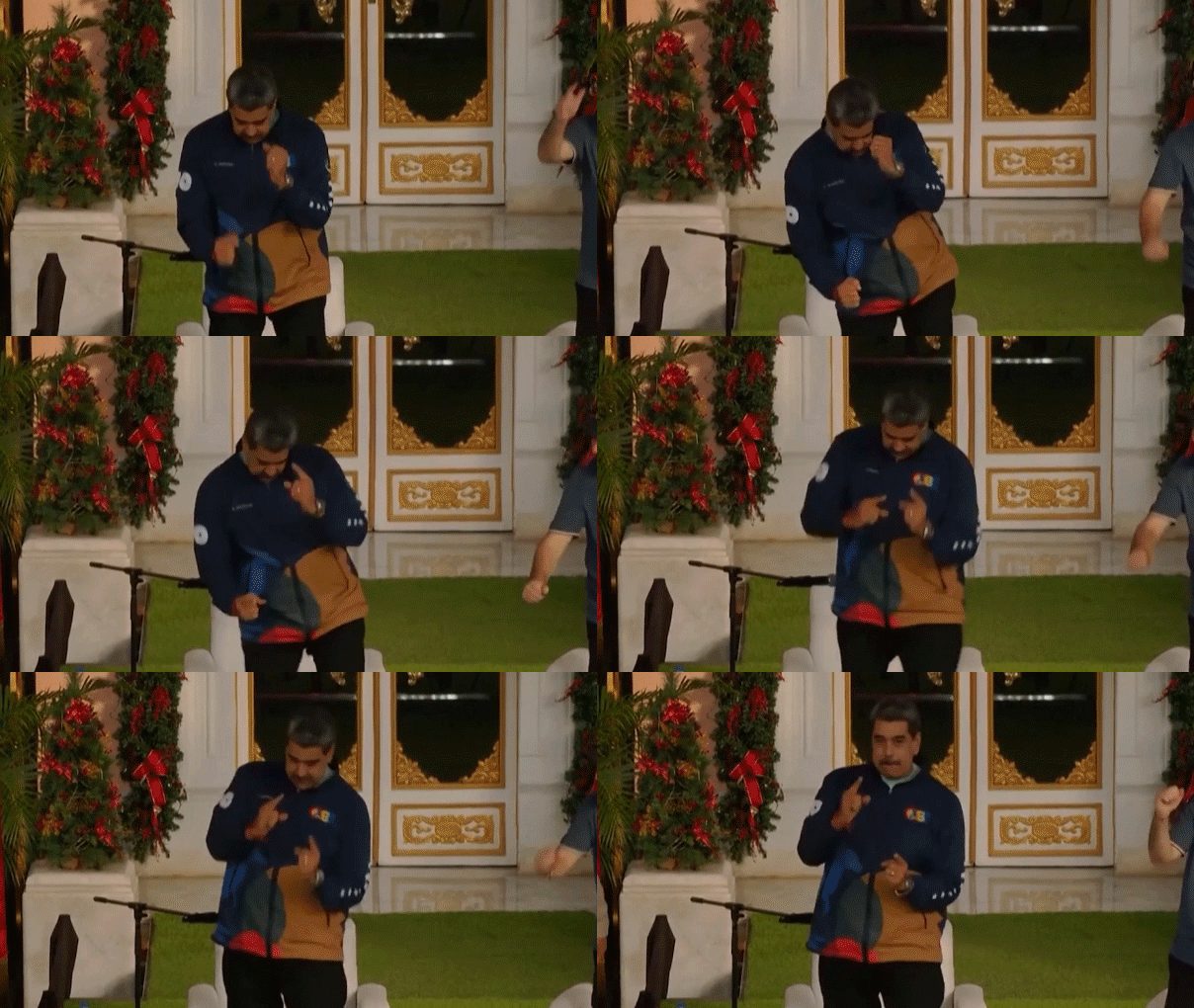
This news article drew attention for its portrayal of Venezuelan President Nicolás Maduro’s “peace-dance” amid a U.S. military build-up in the Caribbean. Readers wanted clarity on whether Maduro’s performance is genuine peace advocacy, mere propaganda, or an attempt to portray the U.S. as an unprovoked aggressor to rally support for his regime. This fact-check evaluates the veracity and context of the article’s key claims and examines the strategic motives behind recent Venezuelan messaging.
Historical Context
The relationship between the United States and Venezuela has been tense for over two decades, with U.S. administrations routinely criticizing Venezuelan leadership for alleged human rights abuses, election improprieties, and links to organized crime. More recently, U.S. efforts to curb drug trafficking from Venezuela have led to increased military deployments in the Caribbean. In response, President Maduro’s government has used media, rallies, and symbolic gestures to frame these maneuvers as foreign aggression, stirring nationalist sentiment. Both sides leverage these moments for domestic and international advantage.

Fact-Check Specific Claims
Claim #1: “Venezuelan President Nicolás Maduro danced to a remix of his own peace slogans at a student rally in Caracas.”
Upon thorough review of the latest news and verified media, there is no credible evidence or reporting from the past week confirming that President Maduro recently danced to an electronic remix of his own peace slogans at any student event in Caracas. The last widely reported instance of Maduro dancing at a pro-government event was back in 2019. The article offers no video or primary source corroboration for this claim, making it unsupported by currently available information.
Claim #2: “The electronic track featured Maduro’s own phrases – recycled from speeches promoting peace and rejecting war.”
No recent, verifiable sources confirm the existence of such an electronic track featuring Maduro’s recorded peace slogans at a public event in the timeframe cited. The article does not provide any independently verifiable details or links to audio or video of this event as described, and reputable news outlets have not covered such a performance during the stated period.

Claim #3: “The clip surfaced about a week after Maduro sang ‘Imagine’ at a rally, urging peace while the Trump administration reinforced its military presence near Venezuela to stem drug trafficking.”
There is no recent evidence that President Maduro sang “Imagine” at a rally, nor did reputable media document him using such a performance to publicly advocate for peace during this timeline. No verifiable video or eyewitness news accounts were found to support the assertion that such an event took place in the past week; the article’s description is not substantiated by current reporting.
Claim #4: “On Monday, the State Department formally announced the Cartel de los Soles would be designated as a foreign terrorist organization.”
This claim is accurate. On November 24, 2025, the U.S. Treasury Department did designate the Cartel de los Soles—a network of Venezuelan government and military officials implicated in drug trafficking—as a foreign terrorist organization. This news was widely reported by major outlets and is supported by official government releases.
Source: Reuters

Conclusion
The article presents verifiable facts about the U.S. designating the Cartel de los Soles as a foreign terrorist organization, accurately including official statements on the subject. However, its coverage of President Maduro’s peace-themed performances—including dancing to remixes of his own speeches and singing “Imagine” at rallies—lacks recent, credible evidence or independently verifiable sources. The language and framing seem designed to conflate symbolic gestures with official policy, and may give the impression of greater provocation than substantiated by current news events. While the broader context of Venezuela employing media and public events to shape perceptions is real, the specific details in this report are, in several instances, unsupported or embellished. As always, it’s essential to verify viral claims before accepting or sharing them.
Take Action Now
Want verified news and transparency? Submit your own fact-check requests straight from your phone — Download the DBUNK App.
Link to Original Article