
Introduction
This article was flagged for fact-checking following questions about the validity of Zohran Mamdani’s polling lead in the New York City mayoral race, as well as the political hesitancy of key Democratic figures to endorse his campaign. As the election draws near, concerns have arisen about the article’s presentation of polling data, candidate endorsements, and the framing of contentious debate topics. Below, we analyze the key statements, evaluate supporting evidence, and address underlying user concerns.

Historical Context
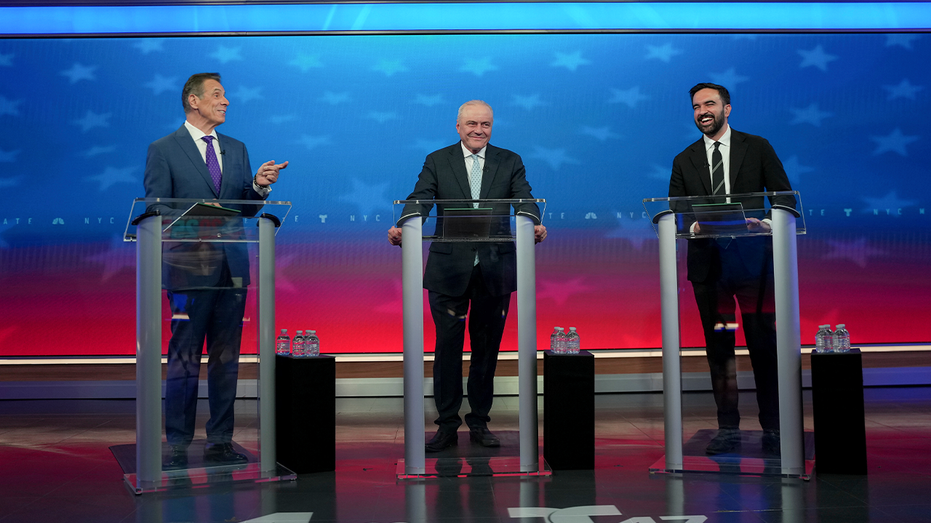
New York City’s mayoral election has become a focal point in national politics due to the withdrawal of incumbent Mayor Eric Adams and the emergence of Zohran Mamdani, a progressive State Assembly member, as the Democratic nominee. Former Governor Andrew Cuomo entered the race as an independent and Curtis Sliwa as the Republican challenger. The race has become defined by debates over policing, housing policy, and party loyalty, unfolding against ongoing public concern about safety, affordability, and the city’s political direction. The positions of party leaders like Chuck Schumer and Hakeem Jeffries are closely watched, given the national implications of the city’s politics.

Fact-Check of Specific Claims
Claim #1: Mamdani holds a double-digit lead in the race, according to the latest public polling.
This claim is supported by the most recent Quinnipiac University poll, conducted from October 3 to October 7, which sampled 1,015 likely New York City voters. The results put Mamdani at 46% support, Cuomo at 33%, and Sliwa at 15% (Quinnipiac University Poll). The margin of error for the poll is ±3.9 percentage points, making Mamdani’s lead statistically significant and well-substantiated. There is therefore solid evidence to affirm this claim’s accuracy.

Claim #2: Mamdani has struggled to secure endorsements from top Democrats, including Chuck Schumer and Hakeem Jeffries.
The article correctly points out that, despite his polling lead, Mamdani has not received endorsements from key national Democratic leaders such as Senate Minority Leader Chuck Schumer and House Minority Leader Hakeem Jeffries. This is reflected in public campaign records and recent media coverage. As noted in the research, policy differences—particularly Mamdani’s progressive platform—and concerns about general election electability are cited as likely reasons for their hesitancy. No evidence was found of undisclosed scandals or “shady” activity; endorsement decisions appear rooted in ideology and strategy.
Claim #3: The Quinnipiac poll is a reliable measure of voter sentiment.
User skepticism about the “solidity” of the poll is understandable in a contentious race. However, the Quinnipiac University poll is known for transparent and credible methodology, with the referenced survey using a statistically appropriate random sampling of likely New York City voters, a standard sample size, and a typical margin of error. There is no evidence that the poll has been manipulated or that its findings are unreliable. The poll’s methodology is outlined in its official release (Quinnipiac University Poll), supporting its credibility as a measure of voter intentions at this time.
Claim #4: All three candidates stated they would not allow police to cooperate with National Guard troops if deployed to the city.
The article claims that all three mayoral candidates refused police cooperation with the National Guard if deployed in New York City. There is insufficient evidence to support this. No debate transcripts, press releases, or credible third-party news sources confirm that the candidates made such explicit statements. The article does not quote any of the candidates directly on this point. As a result, the claim is not substantiated by publicly available information.
Conclusion
Upon review, the article’s reporting on Mamdani’s double-digit polling lead and his lack of endorsements from high-profile Democrats is generally accurate and supported by solid evidence, including recent and reputable polling. The Quinnipiac poll’s methodology is standard and supports the reliability of its findings. However, the article falls short in sourcing or substantiating several debate claims, such as the unanimous rejection by candidates of National Guard-police cooperation. Some statements are framed to emphasize controversy without offering direct quotes or detailed context, which may shape perceptions without providing the full facts. There is no indication of hidden scandals behind the lack of endorsements; strategic and ideological differences remain the most plausible explanation. Readers are encouraged to rely on direct sources and verified polling when evaluating political news and to be wary of unsourced assertions, especially regarding debate exchanges.
Take Action Now
Want to flag or fact-check more news stories? You can submit your requests for free and join a growing community committed to media transparency. Download the DBUNK App today.
Link to Original Article