
Introduction
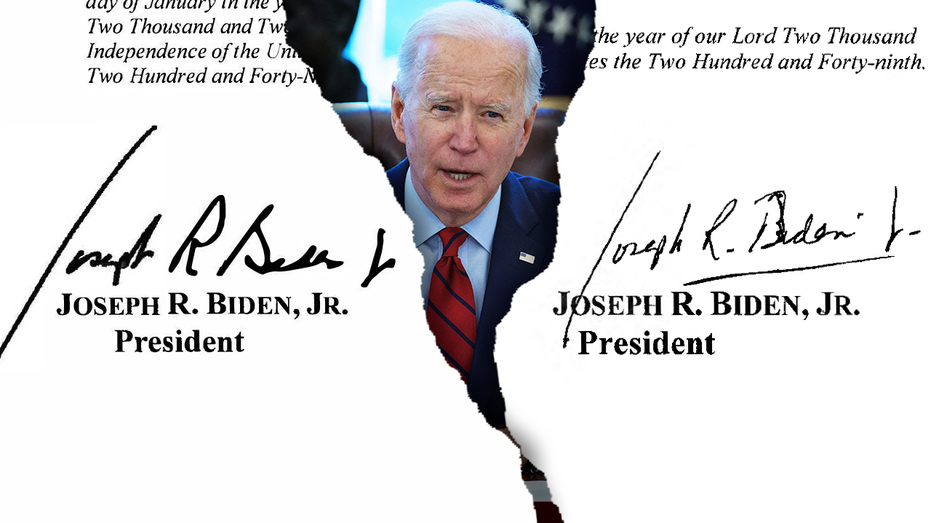
This article was flagged for fact-checking after renewed debate over the use of the autopen by President Biden—specifically in the high-profile case of his son Hunter Biden’s pardon. Media personality discussions, legal challenges from former President Trump, and senior staffer concerns have drawn national attention and prompted questions about the legality and transparency of presidential pardons during the Biden administration.

Historical Context
The autopen—a mechanical device that replicates signatures—has been used by U.S. presidents for decades to manage the enormous volume of paperwork, especially when they are traveling or unable to sign in person. The legality of using the autopen for signing official documents, including pardons and legislation, was confirmed by the Department of Justice and is not prohibited by the Constitution or federal law. However, the practice continues to spark debate during politically sensitive moments, as questions of intent and legitimacy often intersect with broader concerns about presidential power and transparency.

Fact-Checking Specific Claims
Claim #1: President Biden used an autopen to pardon his son, Hunter Biden, on December 1, 2024.
Evaluation: This claim is false. According to available evidence, President Joe Biden personally signed his son’s pardon. Analyses of the pardon document reveal that the signature bears features unique to hand signatures, such as the spelling of “Joseph,” the inclusion of “Jr.,” and a partial underline—distinct traits not replicated by an autopen. Authoritative sources, including oversight.heritage.org and PBS, confirm that the pardon for Hunter Biden was not signed using an autopen. (Source, Source)

Claim #2: The Biden administration’s use of the autopen was unusual, with internal requests for confirmation of the president’s intentions before using it.
Evaluation: This claim is partially accurate but requires context. Internal communications obtained by Axios show that White House staff secretary Stef Feldman and others did express caution, requesting email confirmation of the president’s approval before activating the autopen for certain sensitive documents. While these precautions suggest heightened concern, the use of the autopen itself is not unusual for presidential administrations. What was distinctive in the Biden administration was the extra layer of internal verification, reflecting a desire for transparency over the president’s intent, rather than the frequency of autopen usage itself. (Source)
Claim #3: The Department of Justice (DOJ) questioned the legitimacy of Biden’s clemency process and set a record for the largest number of pardons.
Evaluation: This claim is unsubstantiated. While the Biden administration did grant a large volume of pardons and commutations, available evidence does not support the assertion that the DOJ formally questioned the legitimacy of the clemency process. The article references internal DOJ concerns without providing documentation or official statements, and no public reports verify that the DOJ challenged the process or its results. Thus, this claim lacks sufficient evidence for confirmation.
Claim #4: The use of an autopen for signing pardons calls their validity into question under U.S. law.
Evaluation: This claim is false. Both legal precedent and Department of Justice opinions hold that using an autopen does not compromise the validity of a presidential pardon. Neither the Constitution nor federal law require a president’s handwritten signature for clemency to take effect. This view is affirmed by Justice Department guidance from as early as 1929, which states that it is up to the president to decide how to confirm their approval. Thus, suggestions that autopen usage voids presidential actions are not supported by legal scholarship. (Source, Source)
Conclusion
The article mixes facts with speculation and at times presents a misleading narrative regarding the use of the autopen in the Biden administration. While it is true that White House staff exhibited unusual caution by seeking additional confirmation before using the autopen, this does not mean such use was unlawful or unprecedented. Notably, President Biden did not use the autopen to pardon his son Hunter; he personally signed that pardon. Suggestions that autopen-signed pardons are invalid are not supported by U.S. law or precedent. Claims of Justice Department objections remain unsubstantiated, with no public or documentary proof. Overall, while aspects of the article show internal governmental caution, some claims go beyond what is supported by the evidence and risk misleading readers about the legitimacy of the actions or the law.
Take Action Now
Concerned about misinformation? Download the DBUNK App for free, flag articles for review, and help restore trust in the news you see every day.
Link to Original Article
Visit the original article here