
Introduction
This news article was flagged for fact-checking after raising significant allegations about the U.S. government’s handling of unaccompanied migrant children—specifically, explosive claims about missing children, dangerous sponsors, child trafficking risks, and government accountability. Many readers are asking if these claims are true, why the topic has not received even broader attention, and whether there is credible evidence to substantiate them. We break down the major claims and present what the facts reveal.
Historical Context
The issue of unaccompanied migrant children arriving at the U.S. southern border is not new. Over the past decade, waves of children—primarily from Central America—have entered the U.S. without parents or legal guardians, triggering debates over border security, immigration policy, and child welfare. Federal agencies, including the Department of Health and Human Services (HHS), are charged with processing and placing these children with vetted sponsors in the country. Over the years, challenges with tracking and safeguarding the welfare of these children, across multiple administrations, have led to recurring headlines and policy hearings.

Fact-Check of Specific Claims
Claim 1: “Thousands of migrant children went missing.”
This claim is accurate. Federal data shows that between January 1, 2021, and December 31, 2023, the Department of Health and Human Services (HHS) lost contact with 112,872 unaccompanied migrant children within 30 days of their release to sponsors. This represents about 48% of all unaccompanied minors released during that period. Loss of contact does not necessarily mean each child is in danger or trafficked, but it does signal failures in follow-up and tracking, raising legitimate concerns about their safety. (Source)

Claim 2: “Dangerous sponsors slipped through the system.”
This claim is also supported by evidence. Reports and congressional testimony confirm that some children have been placed with sponsors who were not properly vetted, leading to tragic cases of abuse. In a high-profile incident, a 49-year-old Honduran man posing as a great-uncle was approved as a sponsor for a young girl, only for both he and another individual to later be arrested for the child’s sexual abuse and torture. Weaknesses in sponsor vetting have been documented and criticized by multiple government oversight bodies. (Source)

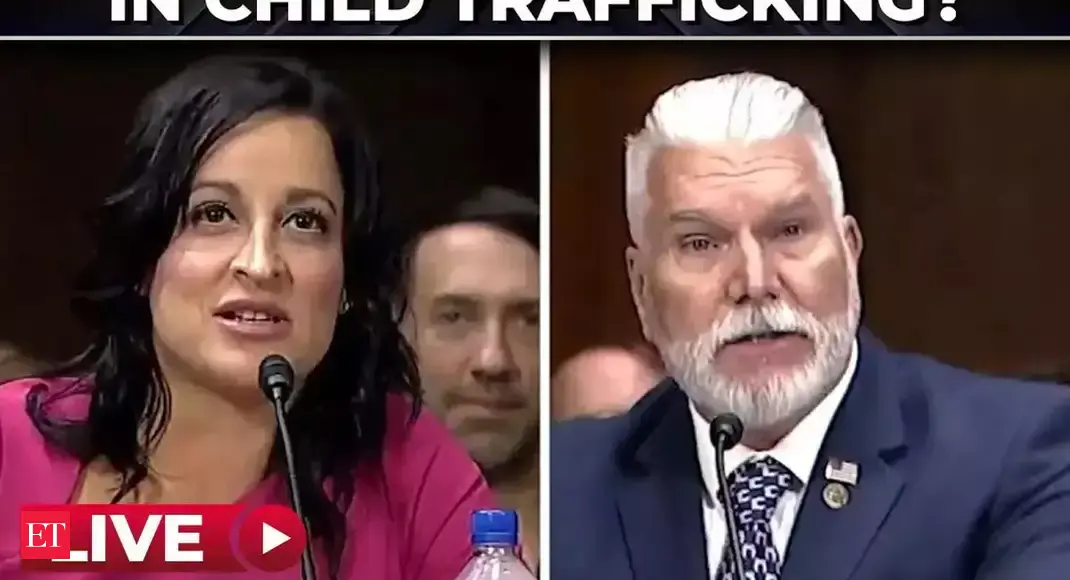
Claim 3: “Explosive testimony raises new questions about accountability, child trafficking, and Biden administration’s border policies.”
This claim is accurate in that recent congressional hearings have included testimony sharply criticizing federal policy and highlighting the dangers faced by migrant children, including heightened risk of trafficking. Witnesses at these hearings argued that the U.S. government’s rushed processes and insufficient follow-up may inadvertently facilitate child exploitation. However, direct evidence of the federal government intentionally enabling trafficking is not established, but the concern about systemic weaknesses remains valid and well-documented. (Source)
Claim 4: “The Biden administration prioritized the release of thousands of migrant children without doing background checks or conducting mandatory home studies.”
This claim is supported by reports showing that a large number of unaccompanied children were released to sponsors without proper background checks or required home studies, sometimes as an emergency measure in response to crowded shelter conditions. This lack of comprehensive oversight has been widely criticized for exposing children to unnecessary risks and failing to guarantee their safety. (Source)
Claim 5: “The Trump administration has located more than 22,000 missing illegal migrant children and arrested more than 400 criminal sponsors, as of March.”
Insufficient evidence. There is no publicly available or independently verified data confirming these specific figures for the Trump administration locating “more than 22,000” missing children or arresting “more than 400” criminal sponsors. While there is record of efforts to locate missing children and to prosecute or arrest criminal sponsors, the article’s statistics remain unsubstantiated by credible reporting or government sources.
Conclusion
The article’s central claims about the missing migrant children, inadequate sponsor vetting, and ongoing accountability concerns within the Biden administration’s approach to the border crisis are substantiated by recent data, government reports, and congressional testimony. The evidence underscores substantial problems—primarily, the inability to track nearly half of released children and multiple failures in vetting sponsors, which sometimes resulted in child abuse or exposure to trafficking networks. While certain figures relating to past administrations lack verification, the article accurately highlights systemic gaps that have provoked bipartisan concern. It is important for readers to recognize that, although the failures are severe and much-debated, not every untracked child is confirmed trafficked or harmed; rather, the tracking and oversight failures themselves represent the core risk to child safety. Readers are encouraged to stay informed, seek multiple sources, and hold policy leaders to account for improvements.
Take Action Now
Want to help stop the spread of misinformation? Download the DBUNK App for instant fact-checks and submit your own article requests—for free!
Link to Original Article
Read the original news article here:
https://economictimes.indiatimes.com/news/international/world-news/several-13-17-year-old-girls-bombshell-claim-ties-biden-admin-to-child-trafficking-pipeline/videoshow/125699077.cms