
Introduction
This article about recent U.S.-Ukraine peace talks, published on CNN, drew attention for its strongly optimistic tone while reporting on negotiations in Geneva. Our readers have asked whether reports of “progress” are authentic or simply meant to influence opinion among European Union (EU) leaders who are weighing aid decisions for Ukraine. We examine if the article offers a full, accurate picture or if the narrative could mislead readers about the motives and substance behind these high-stakes talks.

Historical Context
Since Russia’s full-scale invasion of Ukraine in early 2022, Western governments have repeatedly sought diplomatic solutions while supporting Ukraine’s defense. The war has led to thousands of deaths, territorial changes in Eastern Ukraine, and deep divisions within the international community. Peace proposals—including the latest U.S. 28-point plan—typically spark debate on the balance between realpolitik, Ukrainian sovereignty, and Russian demands. The European Union, in particular, has been wary of initiatives that bypass its input or weaken Ukraine’s independence.

Fact-Check of Specific Claims
Claim #1: The U.S. peace proposal requires Ukraine to surrender key territories in the Donbas region that Russia has annexed but not fully captured.
The article states that “the proposal for Ukraine to surrender key territories in the Donbas region…has been a longstanding red line for Kyiv.” This claim is accurate based on international reports. The current U.S. peace plan has included territorial concessions in the Donbas, and such terms have been a source of strong resistance from Ukraine and significant criticism by both Ukrainian leaders and European allies. Concerns have centered on the fact that ceding these areas could undermine Ukraine’s security and sovereignty, consistent with reporting from NY1 and AP News. Thus, the article presents this point correctly.
Claim #2: German Foreign Minister Johann Wadephul said that all issues concerning Europe, including NATO, have been removed from the U.S. peace plan.
The article quotes Wadephul asserting, “All issues concerning Europe, including those concerning NATO, have been removed from this plan….” Our research found no verifiable evidence or reliable reporting that German Foreign Minister Johann Wadephul made this statement. Furthermore, the most recent analyses indicate that NATO-related restrictions within the U.S. proposal are still under debate and remain a point of contention among EU officials. This claim appears at best unsubstantiated and may mislead readers about Europe’s involvement in negotiations. See more at Al Jazeera.
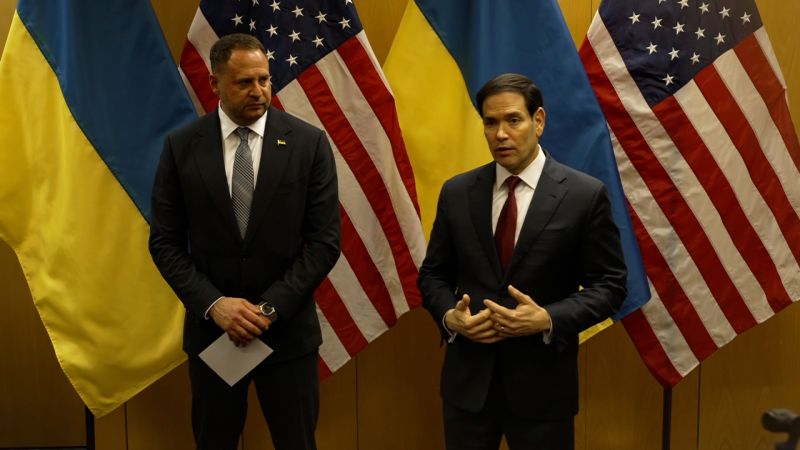
Claim #3: U.S. Secretary of State Marco Rubio described the Geneva talks as “probably the most productive and meaningful” so far.
This statement is accurate and matches the official record. Marco Rubio did call the recent Geneva talks “probably the most productive and meaningful meeting” since the U.S. became involved in the peace process, expressing optimism while withholding substantive details. This optimism is echoed in ABC News coverage, although skepticism remains about the likelihood of swift resolution.

Claim #4: The U.S. peace plan has attracted bipartisan criticism for concessions to Russia, including ceding territory, limiting Ukraine’s military, and promising not to join NATO.
This is confirmed and supported by recent reporting. The U.S. proposal faces criticism from both American political parties and several European leaders, with detractors pointing to its apparent alignment with long-standing Russian demands. Expected concessions include the ceding of disputed territory, constraints on Ukraine’s military, and withdrawal of ambitions to join NATO. These concerns have been publicly raised by Ukrainian authorities and summarized by sources such as NY1.
Addressing the Reader’s Question: Is the peace talk “progress” hype to sway EU support for more aid?
The timing of the U.S. optimism and announcements about “progress” have sparked discussion about strategic motives. While there is no conclusive evidence that the upbeat messaging is meant solely to pressure EU leaders for more aid, it is clear that European officials are wary of being sidelined and are critical of any agreement not fully safeguarding Ukrainian sovereignty. Analysts suggest that publicizing progress may be intended to influence both public opinion and European policymakers, but the record shows that the EU remains steadfast in linking further support to Ukraine’s interests alone. EU commitments to continued military and financial backing are public and ongoing, as confirmed by Reuters and AP News.
Conclusion
This article accurately reflects the tension and ongoing controversy around the current U.S. peace proposal for Ukraine, especially regarding key territorial concessions and NATO-related issues. It reliably reports on the official optimism from U.S. officials and the criticism from Ukrainian and European leaders. However, its claim about comprehensive European agreement lacks evidence and the reported comments from the German foreign minister remain unverified. While the reported “progress” could have strategic underpinnings, including encouraging more EU aid, there is no definitive proof that the optimism is a coordinated effort to manipulate European support. Readers should be aware of the persistent differences among stakeholders and the evolving nature of the peace talks. For a clearer, up-to-date view on such issues, using tools like DBUNK can help ensure information is specific, accurate, and free from unnecessary spin.
Take Action Now
Get the facts that matter and help stop the spread of misinformation. Download the DBUNK App to read, flag, and request fact-checks on the stories that matter to you.
Link to Original Article