
Introduction
Readers flagged this article because it highlights optimistic claims from U.S. officials about progress in the Ukraine peace talks, while also referencing underlying obstacles that could jeopardize a deal. Amid fast-paced diplomatic efforts and continued military hostilities, many are questioning whether public statements represent genuine breakthroughs or political messaging aimed at shaping perceptions. This report investigates whether the touted advancements are substantive or mainly political spin.
Historical Context
Since Russia’s full-scale invasion in 2022, Ukraine has faced an unrelenting conflict, resulting in vast destruction, ongoing displacement, and persistent global attention. Over the years, several attempts at a negotiated settlement have failed, often stumbling over territorial disputes and mutual distrust. Recent U.S.-supported proposals mark a renewed push for diplomacy, with high-profile talks in Geneva and Abu Dhabi, but enduring tensions, fresh Russian attacks, and public skepticism continue to challenge hopes for a swift resolution.

Claim 1: U.S. officials report “tremendous progress” and only “a few remaining points of disagreement” in Ukraine peace talks
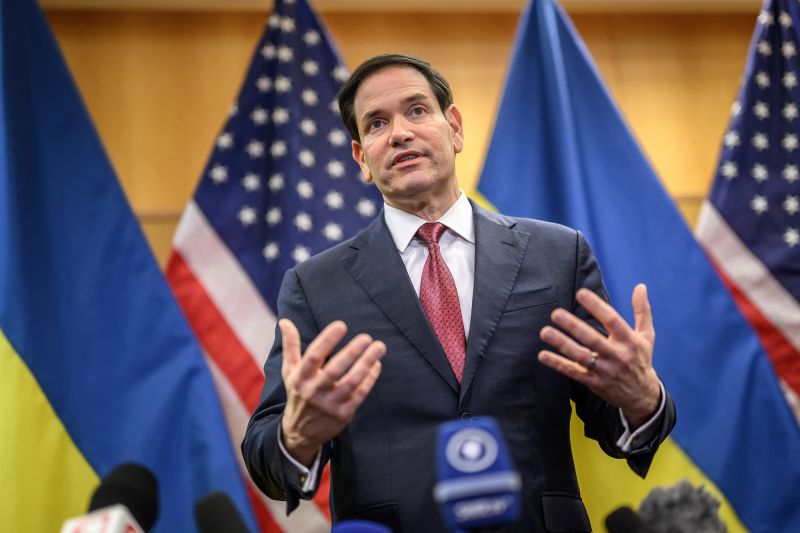
The article presents an upbeat assessment from President Trump and Secretary of State Marco Rubio, suggesting that peace negotiations are nearing completion and only minor issues remain. However, recent research and independent reporting illustrate a more complex picture. While U.S. and Ukrainian representatives confirm areas of substantive agreement, major sticking points—such as the future status of the Donbas region, Ukraine’s relationship with NATO, and military limitations—persist without resolution. The White House’s statements regarding “a few remaining points of disagreement” are not fully supported by the facts, as detailed in
contemporary coverage and acknowledged by Ukrainian officials. Thus, the optimism is overstated and lacks critical nuance.

Claim 2: Ukrainians have agreed to the peace deal, with only “minor details” outstanding
The article references statements made after a U.S.-Russia meeting in Abu Dhabi, implying that Ukrainian agreement on the peace framework is all but secured. In practice, Ukrainian leadership has not confirmed a finalized deal. Reports indicate that while there is consensus on several framework points, sensitive issues remain that require top-level decisions. President Zelenskyy himself has requested direct talks with U.S. officials to settle these matters, highlighting that agreement is far from complete. Like the previous claim, this assertion misleads by glossing over contentious obstacles and the ongoing, unresolved discussions documented by
multiple outlets.
Claim 3: U.S. proposal includes Ukraine limiting its military to 600,000 personnel, and Kyiv is close to agreement
The article references the U.S. proposal to cap Ukraine’s military at 600,000 troops, framing the discussion as one where significant progress has been made. While it is true that the initial U.S. proposal set this limit, subsequent negotiations resulted in a higher proposed figure (800,000), as confirmed by recent
reporting. Ukrainian officials have insisted on further adjustments. Therefore, the article omits this critical evolution in negotiations, portraying the talks as more settled than they are in reality.

Claim 4: The U.S. proposal demands Ukraine renounce its NATO ambitions and Kyiv objects
The article accurately reports that one unresolved demand is for Ukraine to foreclose on its NATO membership aspirations. Ukrainian officials have publicly opposed this condition, viewing it as a dangerous precedent that undermines national sovereignty and emboldens Russian influence. European leaders share these concerns, expressing that Ukraine’s right to seek alliances should not be relinquished for peace. This claim is verified by statements from both Ukrainian and European leaders, including recent
AP News reports.
Conclusion
The article combines official optimism with critical commentary sourced from Ukrainian officials, revealing that significant barriers remain to a comprehensive Ukraine peace deal. While it acknowledges ongoing challenges in certain paragraphs, the repeated emphasis on “tremendous progress” and “few remaining points of disagreement” is not fully supported by independent research and recent statements from Kyiv. The presentation could mislead readers into believing that a finalized deal is imminent, when in reality, major issues—territorial concessions, military restrictions, and NATO ambitions—remain far from resolved. The article’s selective framing represents political spin rather than a balanced account, underscoring the importance of critical, context-rich news consumption.
Take Action Now
Want to see the facts behind every headline? Download the DBUNK App to access real-time fact checks and submit your own requests for free.
Link to Original Article